Inside the flower stalls of City Market

There is a particular kind of beauty to Nairobi City Market.
Built in 1930, the market has lived through a century of changes in the city around it. What began as a municipal market for fruits and vegetables has evolved into a bustling collection of florists, butcheries, food vendors, craft sellers and small businesses. Today, it remains one of the city’s most recognisable markets, tucked between Muindi Mbingu and Koinange streets in the heart of the CBD.
But approach the market from Koinange Street and the first thing you may notice isn’t the meat, the curios or the noise of the city.
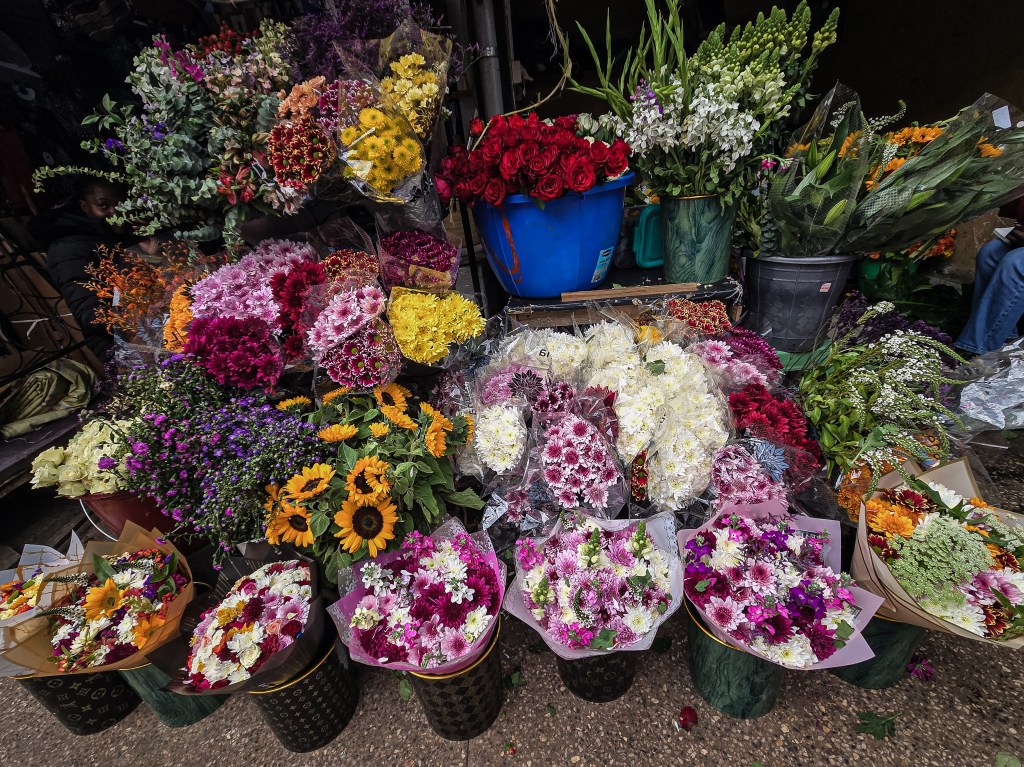
It’s the flowers. Buckets and bunches spill from the stalls in shades of red, pink, yellow, orange and white. Roses sit alongside lilies, carnations and other seasonal blooms.
A market built into the city
City Market has been part of Nairobi’s commercial life since 1930. Its distinctive hangar-like structure was built during a period when Nairobi was rapidly developing as a city, and the market initially served as an important retail outlet for fresh produce. Over time, its role changed as the city grew and other markets took on the wholesale distribution of fruits and vegetables.
Today, the market is a reflection of Nairobi itself: practical, colourful, busy and constantly changing.
The flower stalls are one of its softer corners.
From farm to florist
Kenya’s flower industry is largely known for its exports. Roses and other cut flowers grown around the country travel to markets across Europe and beyond. But not every flower follows that route.
Some find their way into Nairobi’s retail markets, where florists work with growers and wholesalers to bring fresh stems to people in the city.
City Market sits somewhere in the middle of this larger story. It is the point where flowers enter the everyday lives of Nairobians.
The people behind the bouquets
Behind every arrangement is a florist who knows the flowers intimately.
They know which roses are opening well, which stems will last, which colours customers tend to choose and which flowers are difficult to find at certain times
Ask a florist how long they have worked at City Market and you may find that the answer opens a much bigger story about Nairobi.
Some traders have spent years building relationships with customers. Others have watched the way people buy flowers change as online florists and delivery services have become more common.
Yet the market continues to offer something an online catalogue cannot quite replicate: the ability to stand among the flowers and choose them yourself.
A stem usually retails for 30ksh and you can edit and design your own bouquet to your complete satisfaction.
What should you buy?
For someone unfamiliar with Nairobi’s flower markets, City Market can initially feel overwhelming. There are colours everywhere and, depending on the season, the selection changes.
Roses remain a classic choice, particularly for romantic occasions. Lilies bring height and drama to arrangements, while carnations are often used for their longevity and range of colours. Smaller flowers such as baby’s breath can soften a bouquet, while foliage adds volume and movement.
But perhaps the best approach is not to arrive with a finished picture in your head.
Tell the florist what the flowers are for, tell them your budget, then let them make something.
That conversation is part of the experience.
More than a flower market
It is easy to walk through City Market and see only what is immediately in front of you: flowers, meat, crafts, food, customers.
But markets are archives of a city’s everyday life.
They show us what people buy, what they celebrate, what they value and how they make a living.
The flower stalls tell one small part of Nairobi’s story.


Leave a comment